
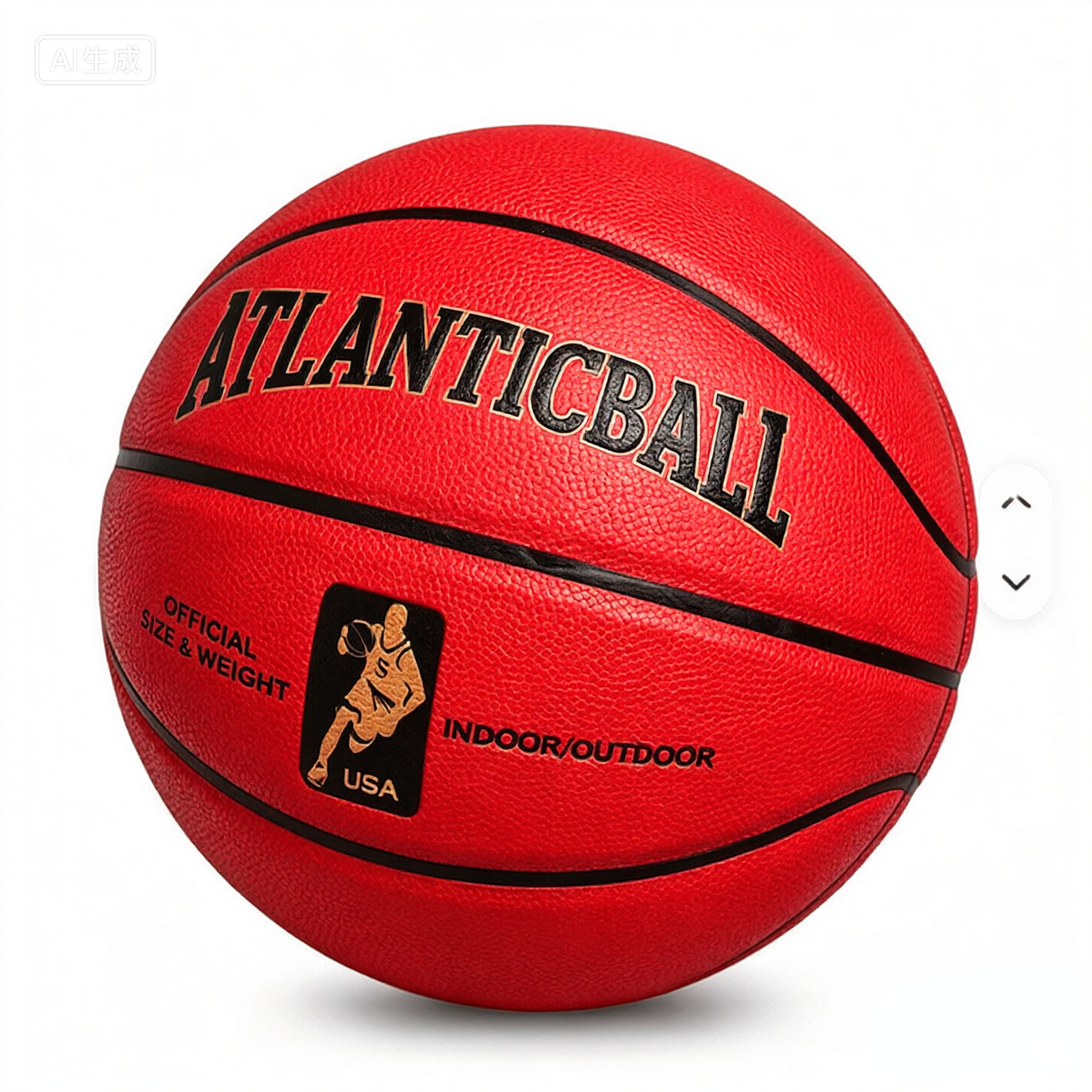
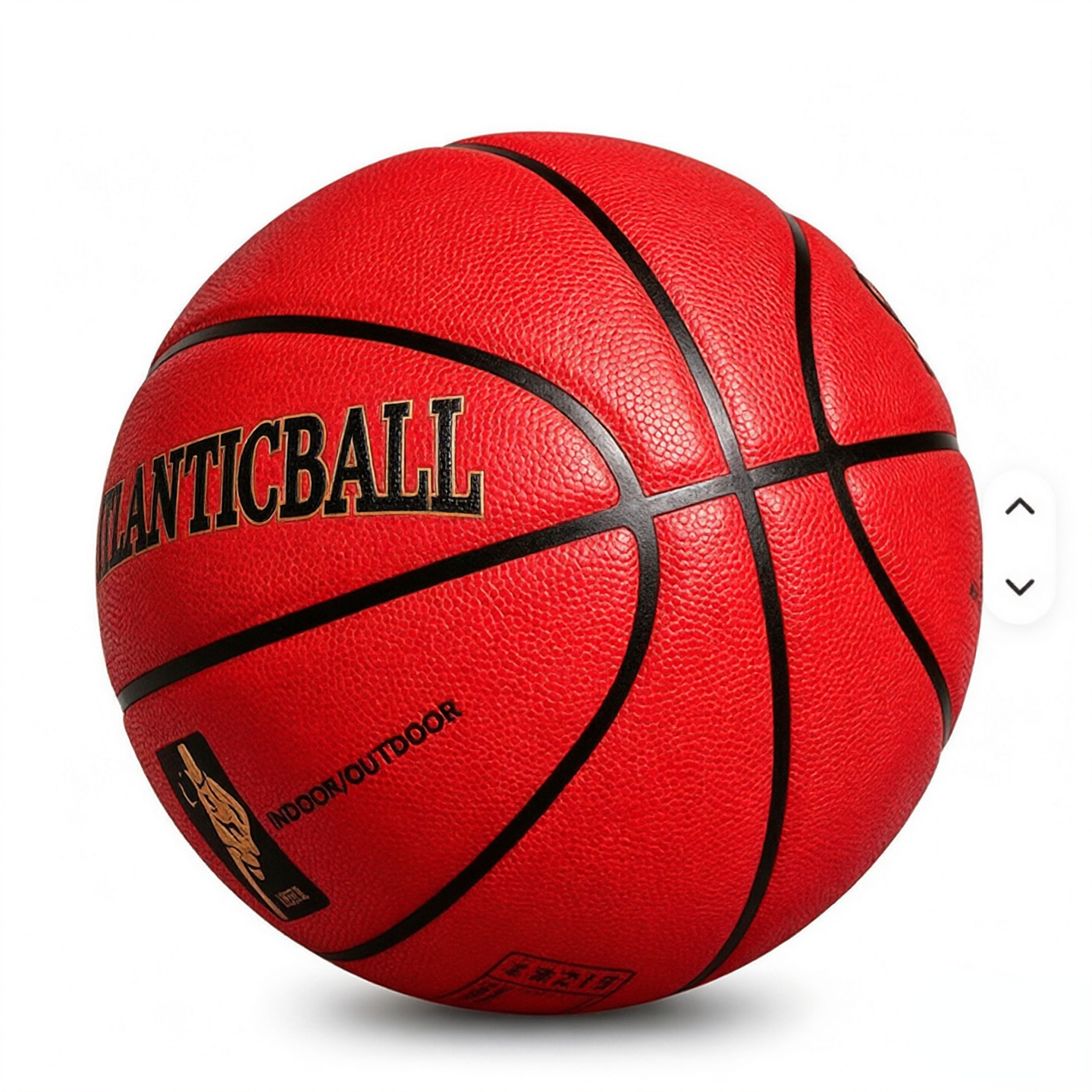
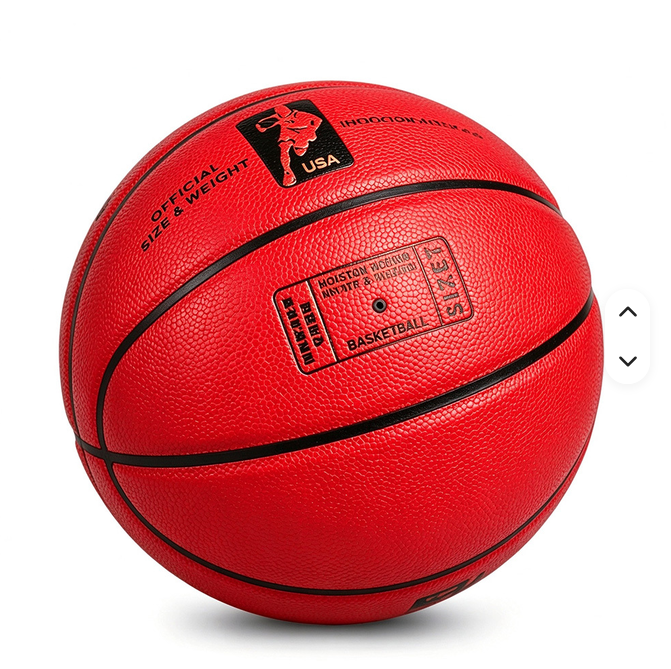
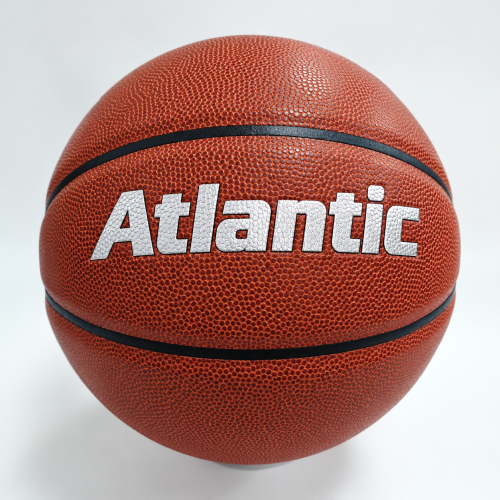
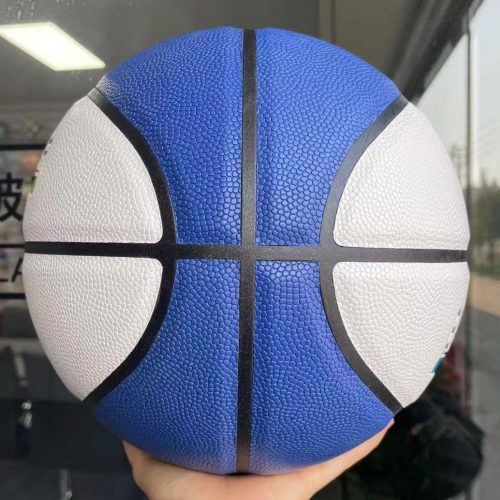
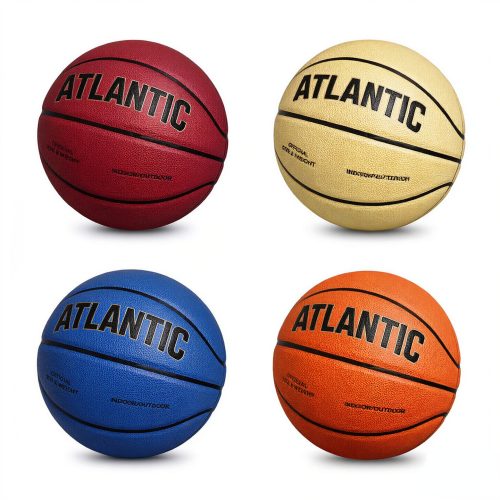
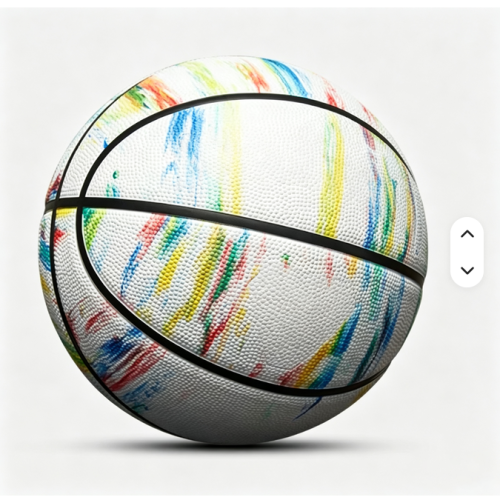
Custom Logo Red PU Basketball – Official Size, Multi-Color, OEM Service, Indoor/Outdoor
| 1-20 pcs | $6.99 / pc |
| 20-200 pcs | $6.59 / pc |
| 200-999 pcs | $6.20 / pc |
| ≥1,000 pcs | $5.80 / pc |
Supplier’s customization ability:Size
6
7
Note: Prices are product-only. Shipping cost will be quoted separately.
We'll calculate the most cost-effective shipping method for you, and all balls ship deflated to keep freight costs low.
Product Specifications
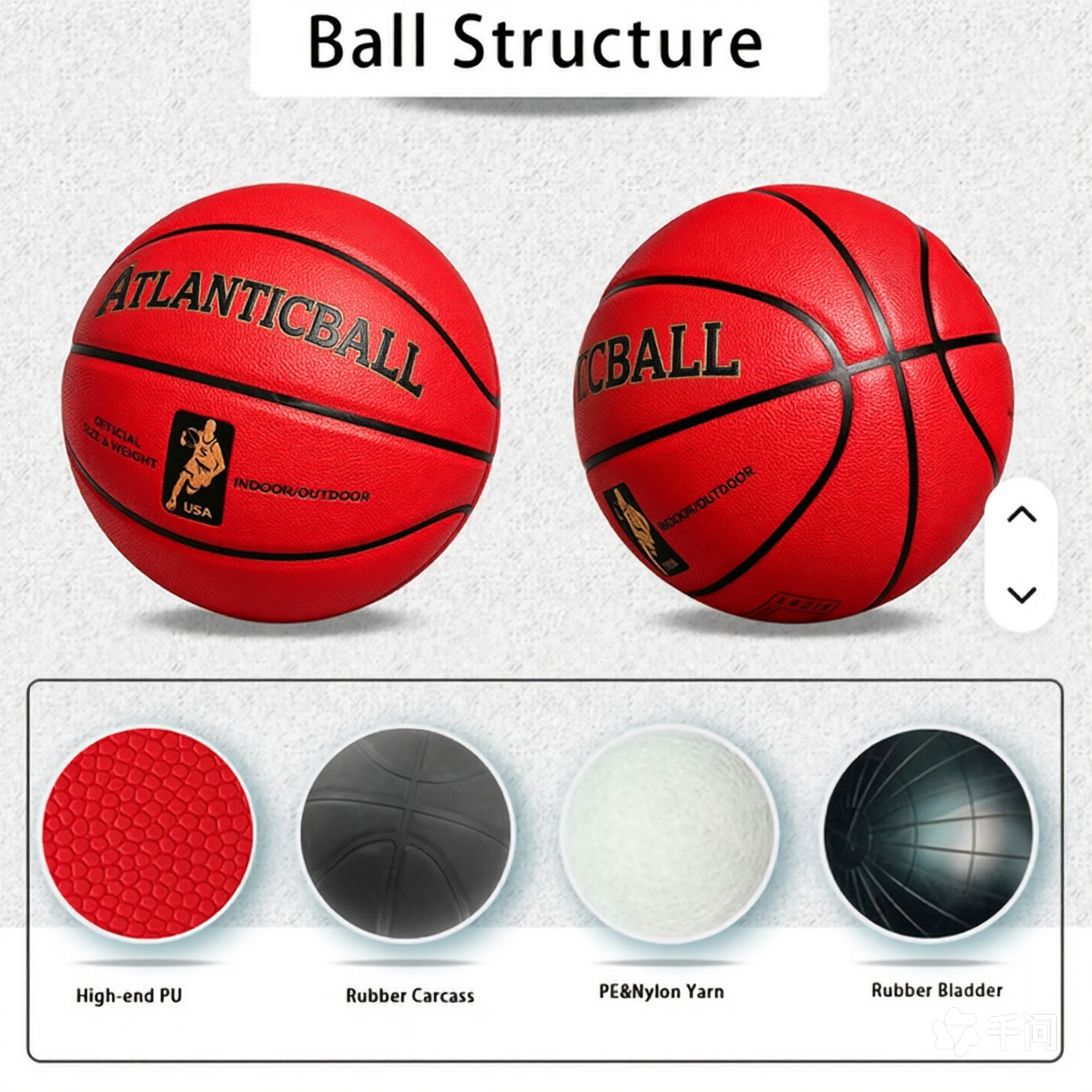
| Ball Size | Size 3, Size 5, Size 6, Size 7 | Bladder | natural rubber bladder |
| Cover | PU | Feature | Durable, Flexible |
| Model Number | YFH1000 | Place of Origin | Fujian, China |
| Selling Units | Single item | Single gross weight | 0.800 kg |
| Single package size | 25X25X16 cm | Weight | 580-650g |
Introduction to customized basketball
Custom Logo Red PU Basketball – Made for Schools, Clubs & Leagues
Our custom logo red PU basketball combines a soft, tacky feel with excellent durability, making it a top choice for indoor and outdoor programs. The premium PU synthetic leather cover offers superior grip and moisture resistance, while the official size options (5, 6, 7) ensure a consistent bounce for training and games.
We provide full custom PU basketball service, including logo printing, multi-color designs, and OEM packaging. Every ball is tested for air retention and roundness before shipping, and all orders ship deflated to reduce freight costs.
Whether you need a small batch for a tournament or bulk quantities for a school district, we offer factory-direct pricing, low MOQ, and free digital proofs. Reply within 12 hours for a quote and material recommendations.
Tailored Basketball Customization
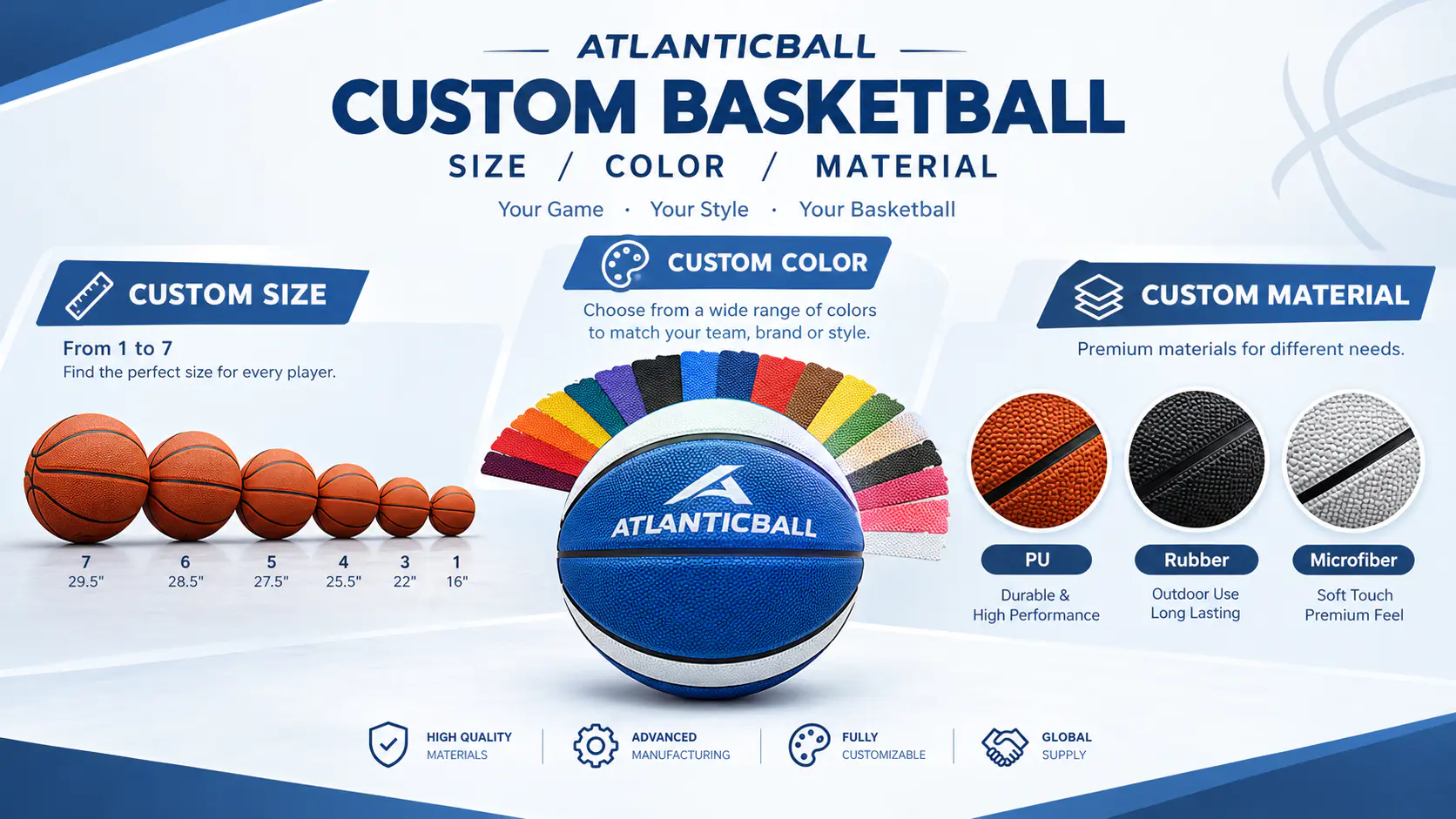
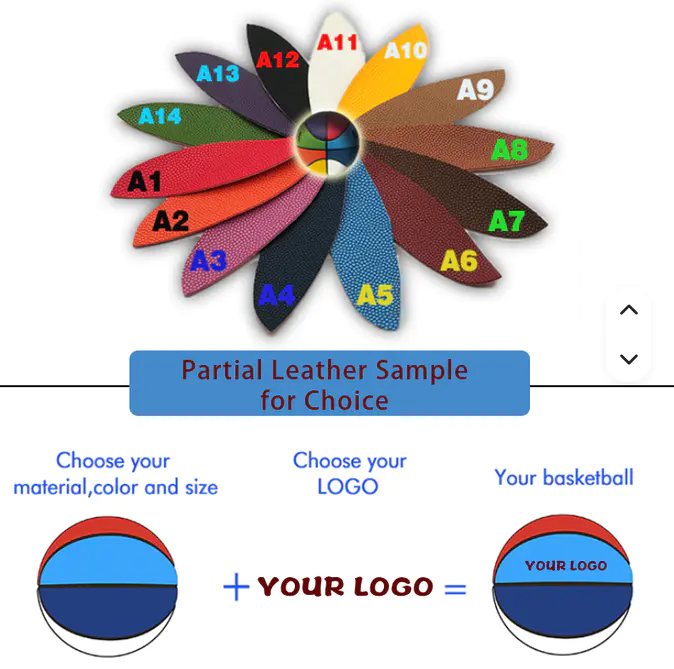
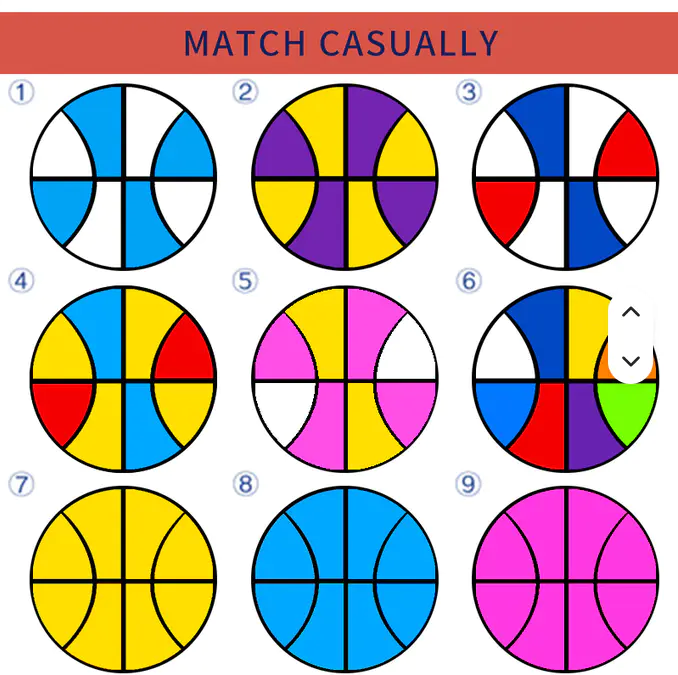
One-stop OEM/ODM solutions for schools, clubs, and distributors. From size mixes to custom packaging, we confirm every detail on a 100% free digital proof before production.
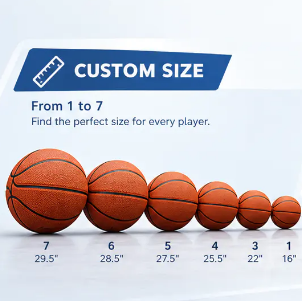
Mix Size 5, 6, and 7 (plus mini sizes) in one order. Perfect for schools and multi-age clubs, allowing you to equip your entire program in a single bulk shipment.
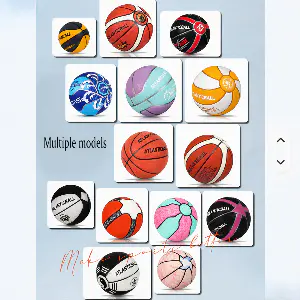
Print your school crest, club logo, or sponsor branding. We use premium screen printing and heat transfer to ensure the graphics stay sharp and peel-free.
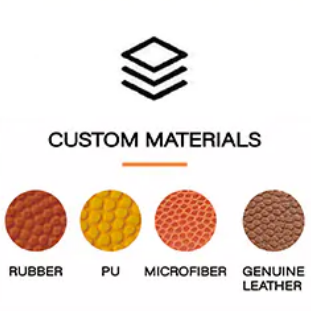
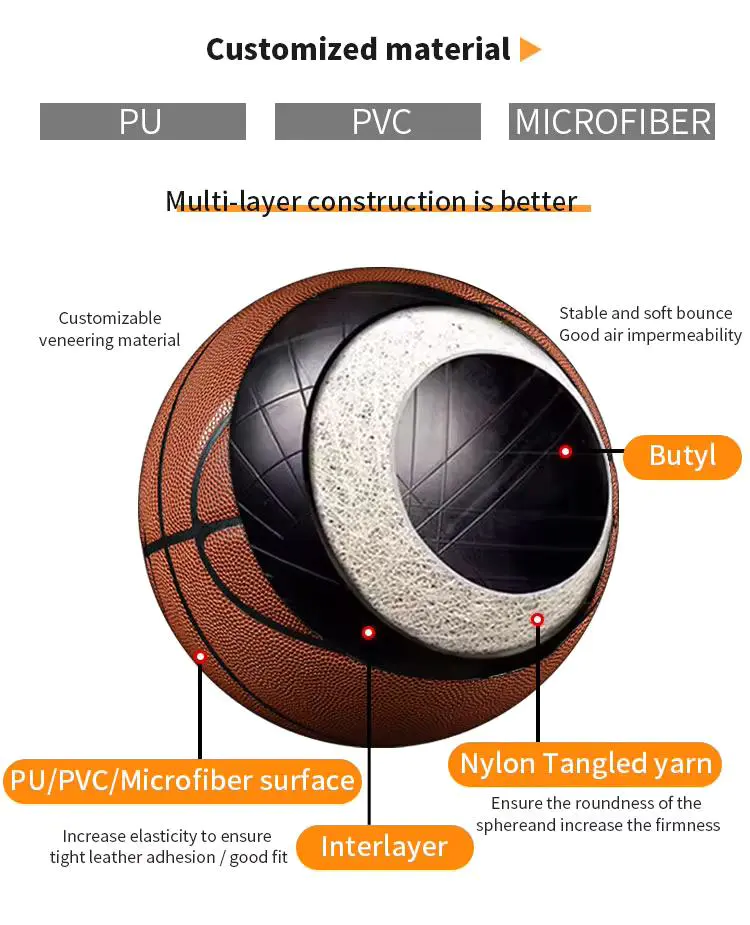
Choose durable rubber for street courts, premium PU for indoor/outdoor use, or soft microfiber for professional match play. All built with butyl bladders.
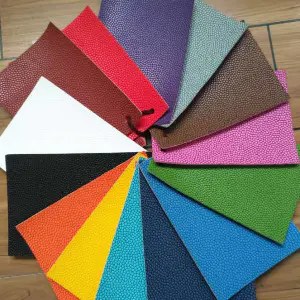
Match exact Pantone colors. We ship all basketballs deflated to save up to 50% on freight, and offer custom carton printing for distributors.
Our Customization Process
From your rough idea to your doorstep in 5 simple steps. No hidden fees, no surprises.
Submit Your Request
Send your design, sizes, quantity, and target date. Don't have a vector logo? We'll help recreate it for free.
Quote & Free Proof
Get a comprehensive quote and a digital mockup of your ball within 12 hours. No commitment required.
Approve the Details
Review the proof. We offer unlimited revisions until you are 100% satisfied with the look.
Factory Production
Once approved, production begins. We conduct strict quality checks at every stage to ensure perfection.
Door-to-Door Delivery
We ship your balls deflated to save you 50% on freight. Delivered directly to your school, club, or warehouse.
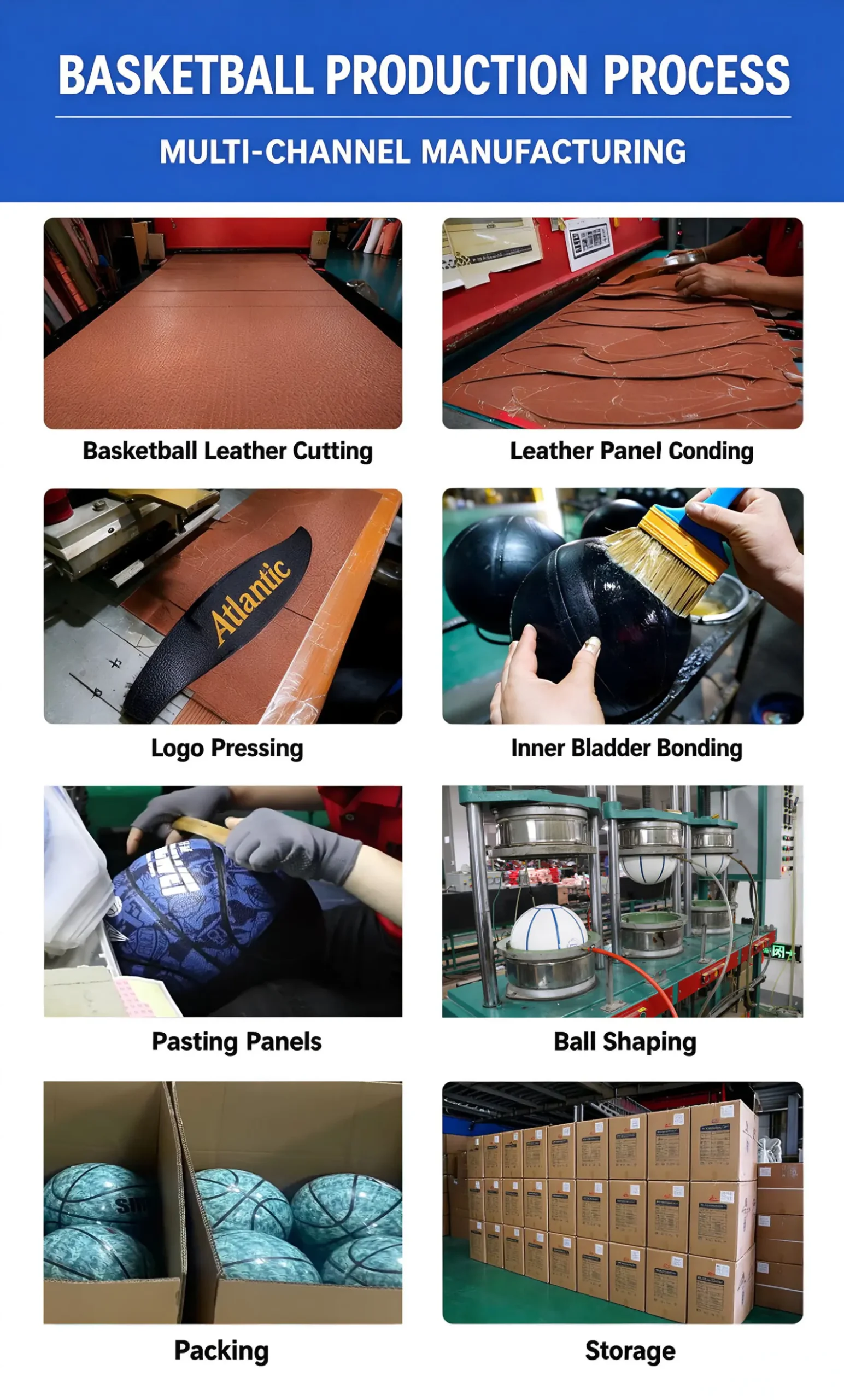
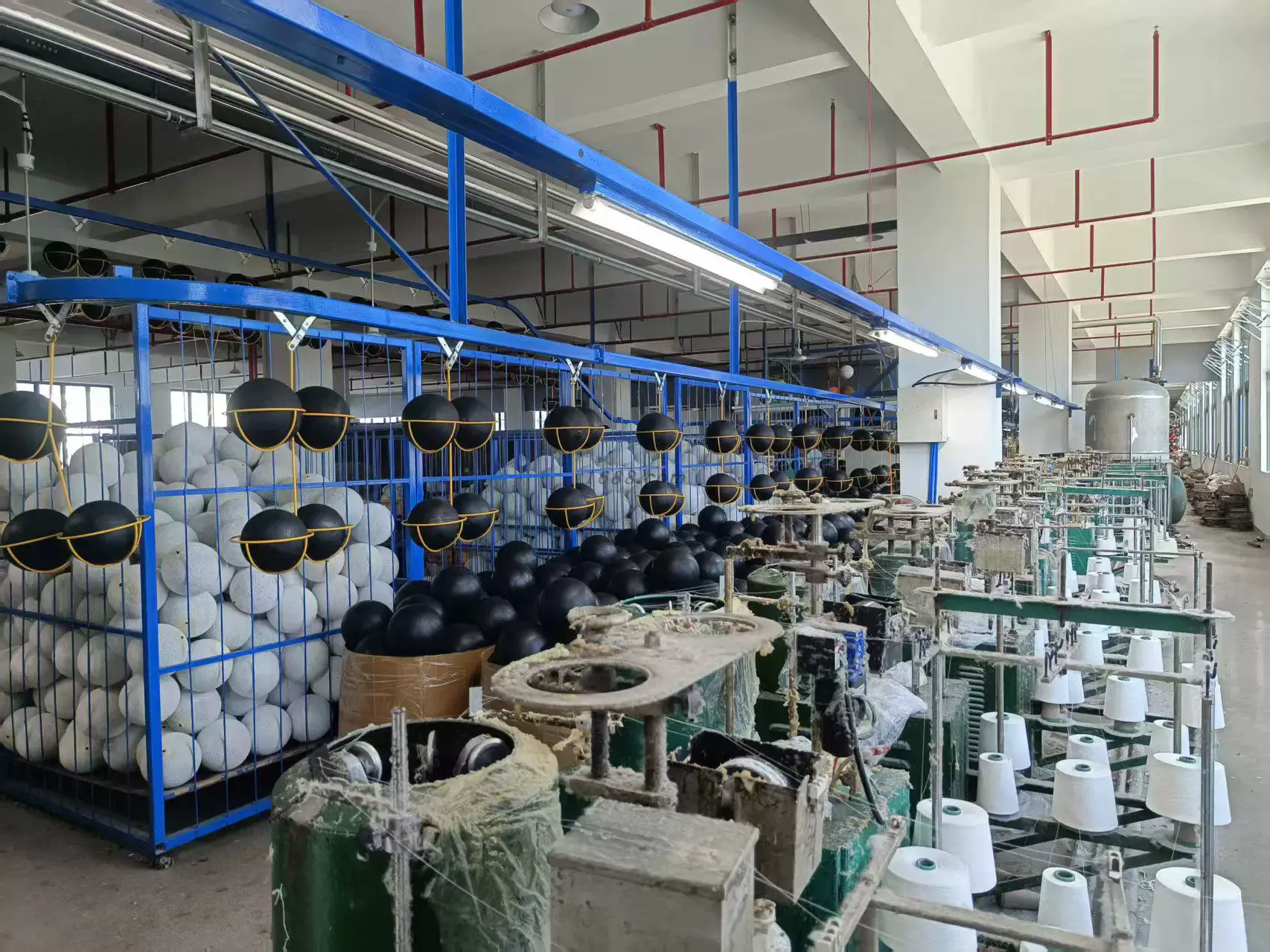
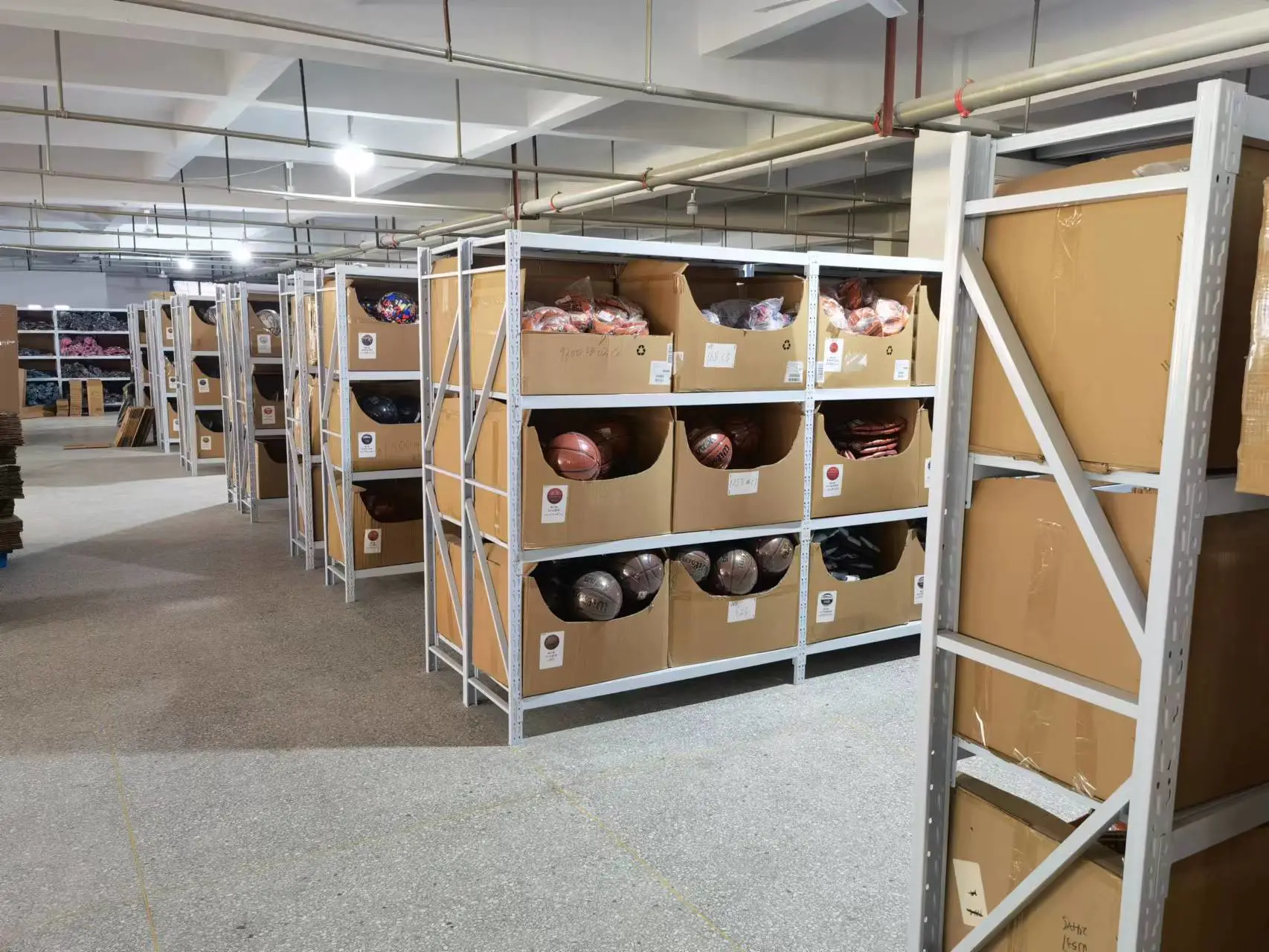
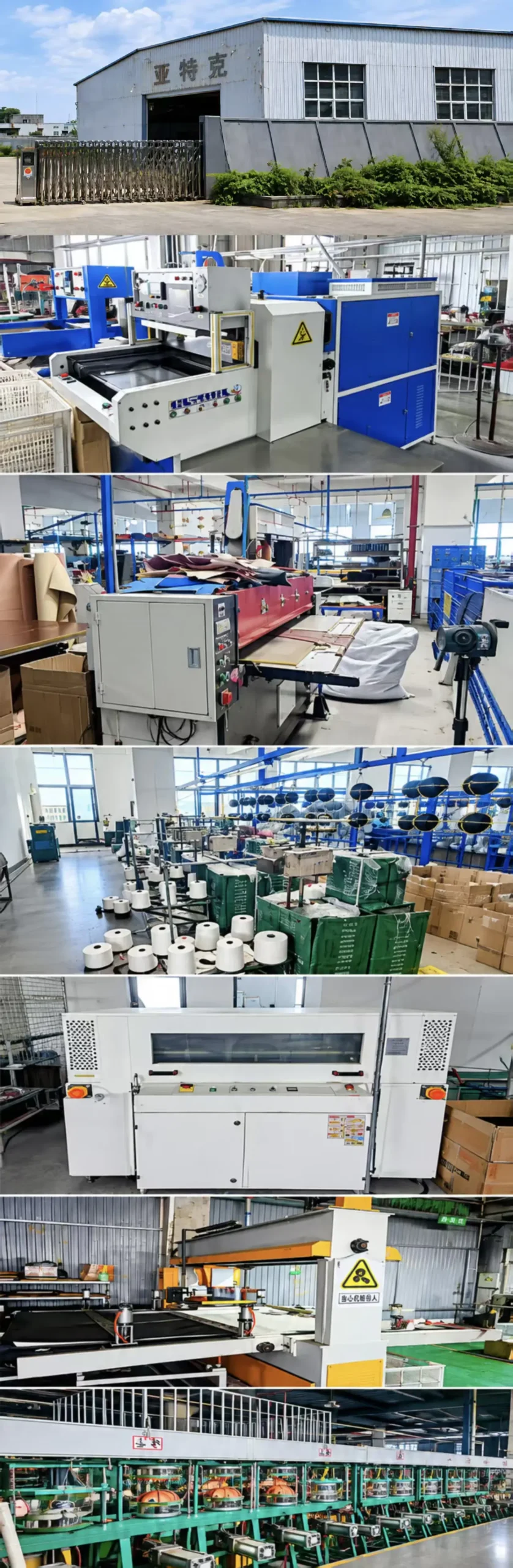
Inside Our Custom Basketball Factory
A quick look at our production line and printing process.
Introduction to basketball manufacturing factory
Stop paying to ship air! Learn how we pack bulk custom rugby balls. We deflate every ball and pack exactly 50 pieces per carton to cut your freight costs.
If you are ordering hundreds of rugby balls from China to your club or warehouse, the factory’s packing method will directly dictate how much you pay for shipping. Get it wrong, and you are literally paying hundreds of dollars to transport air across the ocean.
As a direct custom rugby ball manufacturer, we have optimized our packing process to save our B2B clients as much money as possible. Here is the exact breakdown of how we pack and transport bulk orders, focusing on two golden rules: Deflation and 50 Balls Per Carton.
Rule 1: We Deflate Every Single Ball
You might think your balls should arrive fully pumped and ready to go, but that is a terrible idea for international freight.
A fully inflated rugby ball is mostly air. If you ship 500 inflated balls, you need a massive amount of cubic volume (CBM). Sea freight and air freight charge by volume. By shipping them inflated, you are throwing money away.
We deflate all wholesale rugby balls before packing. Deflating them shrinks their size by more than half. They can be packed flat and stacked tightly.
Will they lose their shape? No. High-quality balls with a proper bladder and wound carcass will bounce right back to perfect shape once you pump them up at your facility. You just need a standard air pump, and you save up to 50% on your shipping costs.
Rule 2: Exactly 50 Pieces Per Carton
How many balls should go into one box? We standardize our master cartons to hold exactly 50 deflated rugby balls per carton.
Why this specific number? It comes down to warehouse ergonomics and weight limits. A carton of 50 standard size 5 rugby balls weighs roughly 20 to 25 kg (44 to 55 lbs).
If we pack 100 balls in a box, it becomes too heavy for a single worker to lift safely. Your warehouse team will hate it, and couriers often charge extra handling fees for overweight boxes. If we pack too few, you waste money on cardboard and handling. Fifty is the sweet spot.
We use standard 5-layer corrugated cardboard to ensure the boxes don’t crush during transit. Inside the box, the deflated balls are packed securely to prevent the logos from rubbing against each other or getting scuffed.
How to Transport Them (Choosing the Freight)
Once your boxes are packed with 50 pieces each, how do they get to you?
- Sea Freight (LCL/FCL): The most common method for bulk orders. Since the balls are flat, you can fit hundreds of cartons on a single pallet. Transit time is 20–40 days.
- Air Freight: Great for 100–300 balls when you need them for a specific tournament. Transit time is 10–15 days.
- Express (DHL/FedEx): Only for small sample orders (under 50 balls).
To make things even easier, we offer DDP (Delivered Duty Paid) shipping. We handle the customs clearance, pay the duties, and deliver the pallets right to your school or club. You just sign the paperwork.
Need a Custom Packing Solution?
While 50 per carton is our standard, we can customize the packing if you have specific requirements. For example, if you are a distributor and want 10 balls per inner box, with 5 inner boxes in a master carton, we can do that.
If you want to see what this looks like in practice, check out our custom NRL style rugby league ball. It packs perfectly flat and inflates beautifully.
Ready to get a shipping quote? Send us your delivery address and the total quantity you need, and we will calculate the exact freight cost and pack plan for you within 12 hours.
All orders ship with clean commercial invoices and correct HS codes to prevent customs delays.
Discover professional tips on how to maintain your basketball to prevent breakdowns. Learn proper cleaning, air pressure control, and storage methods to extend the lifespan of your custom balls.
Whether you are managing a school PE department, running a local sports club, or supplying sporting goods retailers, the longevity of your basketballs directly impacts your budget. A high-quality basketball can last for years if cared for properly, but neglect can lead to cracked leather, loss of grip, and a dead bounce in just a few months. As a leading custom basketball manufacturer, Atlantic Ball shares professional maintenance tips to help you protect your investment and maximize the lifespan of your balls.
1. Clean the Surface and Deep Channels
Dust, sweat, and outdoor dirt mix into the pores of the leather or composite material, ruining the ball’s grip and accelerating wear.
- The Routine: After every heavy training session, wipe the ball down with a damp, soft microfiber cloth.
- Deep Cleaning: Use a soft-bristled brush with a tiny drop of mild soap and water to gently scrub the deep channels where dirt accumulates.
- What to Avoid: Never use harsh chemical cleaners, bleach, or abrasive sponges, as they will strip the protective coating off the PU or leather cover.
2. Monitor and Maintain Optimal Air Pressure
Incorrect air pressure is one of the most common causes of ball failure. Over-inflating causes the seams to stretch and burst, while under-inflating breaks down the inner bladder and ruins the bounce.
- Check Regularly: Test the bounce and firmness every week. A standard basketball should have 7 to 9 PSI of air pressure.
- Use the Right Pump: Always use a proper needle and a pump with a pressure gauge. Moisten the needle with a drop of water or saliva before inserting it to prevent damage to the air valve.
- Storage Pressure: When storing balls for the off-season, do not let them go completely flat. Keep them slightly under-inflated (around 5-6 PSI) to maintain the bladder’s elasticity.
3. Proper Storage and Material-Specific Care
Where and how you store your basketballs matters just as much as how you play with them.
- Avoid Extreme Temperatures: Never leave basketballs in the trunk of a car or direct sunlight. Extreme heat dries out the leather and rubber, causing premature cracking, while extreme cold makes the material brittle.
- Use the Right Court: Composite leather and microfiber balls (like our premium bulk custom logo basketballs) are designed for indoor courts. Playing with them on rough outdoor asphalt will shred the cover in weeks. Save outdoor rubber balls for street play.
- Storage Location: Store them in a cool, dry place. A dedicated ball rack is ideal, but a clean equipment bag works perfectly to keep dust off.
Partner with a Reliable Manufacturer for Long-Lasting Balls
While regular maintenance can significantly extend the life of your equipment, it all starts with the manufacturing quality. At Atlantic Ball, we use high-grade materials and strict quality control to ensure our balls can handle rigorous use. If you are looking to upgrade your inventory, check out our top-rated custom PU leather basketballs built for durability and premium performance.
Need Durable Basketballs for Your Next Season?
Contact our sales team today to get wholesale pricing, discuss OEM logo printing, and request a free product sample.
Shipping custom rugby balls from China to New Zealand? See the real timeline for production, sea/air freight, and NZ customs clearance. Get a fast quote today.
If you are sourcing rugby balls for a school, club, or local league in New Zealand, the first question you usually ask is: “How long until they get here?”
New Zealand is a rugby nation, and we know how important it is to have the gear ready before the season kicks off. As a direct rugby ball factory, we ship to NZ frequently. The honest answer is: it depends on your shipping method. Here is a realistic breakdown of the timeline so you can plan properly.
Part 1: The Factory Phase (Production Time)
Before anything goes on a plane or a ship, your balls have to be made. These aren’t stock items sitting in a warehouse. Every ball is printed, stitched, and quality-checked based on your logo.
Standard production takes 15 to 25 working days after you approve the digital proof. If you are ordering a large batch of bulk custom rugby balls with multiple sizes or complex designs, you should allow a few extra days. The biggest delay we see is waiting for the client to approve the logo proof—if you approve fast, we start production fast.
Part 2: Transit Time (How to Get Them to NZ)
Once the order is packed (we ship all balls deflated to save you 50% on freight volume), you have three options to get them to New Zealand:
- Express Courier (DHL/FedEx): 3–7 days. This is the most expensive option, best for samples or a very small urgent order (under 50 balls).
- Air Freight: 10–15 days. A good balance for mid-sized orders. The balls fly into Auckland or Christchurch, clear customs, and get delivered by a local courier.
- Sea Freight: 20–30 days. The most cost-effective method for large bulk orders. It takes about 3 weeks on the water from Xiamen to Auckland or Tauranga. This is the standard choice for clubs and schools ordering hundreds of balls.
Part 3: NZ Customs & Final Delivery
New Zealand customs (NZCS) is very strict, especially regarding biosecurity and import documentation. If your commercial invoice or HS codes are wrong, your balls will sit in the port, and storage fees will pile up.
If the paperwork is perfect, clearance usually takes 2–4 days. After that, local delivery takes 1–3 days. If you want to avoid all the customs headaches, we offer DDP (Delivered Duty Paid) shipping. We handle the customs clearance and pay the duties for you. The truck just shows up at your school or warehouse.
So, What’s the Realistic Total Time?
If you are ordering a standard batch of our custom printed rugby balls, here is the calendar you should look at:
- Fastest (Air Freight): 25 to 40 days door-to-door.
- Standard (Sea Freight): 40 to 60 days door-to-door.
If your season starts in April, you should place your order and approve your proof by early to mid-February. If you are late, don’t panic—just be prepared to pay for air freight instead of sea freight.
Need Help Planning?
We know how to pack, document, and ship rugby balls to New Zealand without delays. Send us your requirements today, and we will give you a quote, a timeline, and a free digital proof.
Get a Free Quote & Shipping Timeline →
Have a strict deadline for your club or school? Let us know. We can prioritize your production schedule.
Shipping custom rugby balls from China to Australia? Discover exact transit times for sea & air freight, production schedules, and customs clearance tips.
Custom Rugby Balls from China to Australia
If you are sourcing rugby balls for an upcoming season, a school program, or a local league in Australia, the biggest question on your mind is: “When will they actually arrive?”
Shipping from China to Australia is straightforward, but the timeline can vary a lot depending on your chosen freight method and the complexity of your order. As a custom rugby ball manufacturer, we ship to Australia every week. Here is a realistic breakdown of the timeline so you can plan ahead.
Part 1: Production Time (The Factory Phase)
Unlike buying stock items, custom balls are made to order. Before anything ships, your balls need to be manufactured. This includes material cutting, logo printing, hand-stitching, and quality control.
Standard production takes 15 to 25 working days after you approve the digital proof. If you are ordering a large batch of bulk custom rugby balls with unique designs or specific packaging, it is always safer to allow for a few extra days.
Part 2: Transit Time (Choosing Your Freight)
Once the balls are packed, we ship them deflated to save you a massive amount on freight costs. Here are your three options to Australia:
- Express Courier (DHL/FedEx/UPS): 3–7 days. This is the fastest but most expensive option. It is ideal for sample orders or very urgent, small batches (e.g., under 50 balls).
- Air Freight: 10–15 days. A smart middle ground for mid-sized orders. The rugby balls fly into Sydney, Melbourne, or Brisbane, clear customs, and are delivered by a local truck.
- Sea Freight (FCL/LCL): 20–30 days. This is the most cost-effective method for large container orders. Port-to-port transit usually takes about 3 weeks depending on the exact destination port.
Part 3: Australian Customs & Delivery
Australian customs (ABF) is notoriously strict. If your commercial invoice, packing list, or HS codes are wrong, your rugby balls will sit in the port, and storage fees will accumulate fast.
If the paperwork is perfect, clearance usually takes 2–5 days. After that, it takes 1–3 days for final delivery to your school or warehouse. If you want zero headaches, ask us for a DDP (Delivered Duty Paid) quote. We handle the customs clearance and duties, and the truck arrives right at your door.
The Realistic Total Timeline
If you are ordering a standard batch of custom printed rugby balls, here is the calendar you should look at:
- Fastest (Air Freight): 25 to 40 days door-to-door.
- Most Economical (Sea Freight): 40 to 60 days door-to-door.
So, if you need the balls for a winter season starting in April, you need to place your order and approve your logo proof by early to mid-February.
How to Avoid Delays
The biggest delay in this process is usually the logo proof. If you have a vector file (AI or PDF), we can generate a proof for you within 12 hours. Once you approve it, production starts immediately. If you are on a tight deadline, let us know—we can sometimes push urgent orders through the production line.
Ready to get your rugby balls into production? Send us your requirements and we will give you a precise quote with a timeline.
Have a fixed deadline for your league or school? Contact us today to see how we can prioritize your order.
Air retention is one of those things you do not think about until it becomes a problem. You inflate a batch of balls, hand them out to a school or club
How to Test Basketball Air Retention: A Simple Guide for Bulk Buyers
Air retention is one of those things you do not think about until it becomes a problem. You inflate a batch of balls, hand them out to a school or club, and two weeks later half of them are soft. For a coach or athletic director, that is a headache. For a distributor, it is a customer service nightmare.
So how do you test air retention before you commit to a large order? You do not need a lab. You just need a few simple methods and a little patience. Here is how we test balls in our own factory, and how you can do the same when evaluating a sample.
Method 1: The 48-Hour Pressure Test
This is the most reliable way to check air retention.
- Inflate the ball to the standard pressure. For most basketballs, that is 7.5 to 8.5 PSI.
- Use a digital pressure gauge to get an exact reading. Write it down.
- Let the ball sit at room temperature for 48 hours. Do not bounce it or use it.
- Measure the pressure again. If it has dropped more than 1–2 PSI, the ball has a problem.
A good ball with a butyl bladder should lose very little air over 48 hours. A ball with a cheap latex bladder will lose pressure faster. This is one of the main reasons we recommend butyl bladders for bulk orders. They cost a little more, but they keep players on the court instead of at the pump.
Method 2: The Soapy Water Test
If you want to find the leak, not just confirm it exists, use soapy water.
- Mix a few drops of dish soap with water.
- Inflate the ball to normal pressure.
- Brush the soapy water around the valve and along the seams.
- Watch for bubbles. If you see bubbles forming, you have found the leak.
Most leaks happen at the valve. Sometimes it is a loose valve core, which you can tighten with a valve tool. Other times it is a manufacturing defect. Either way, this test tells you quickly whether the ball is worth keeping.
Method 3: The Circumference Check
Air pressure is not the only thing that matters. Shape matters too. A ball can hold air and still go out of round. To check this, measure the circumference with a tape measure right after inflating. Then measure it again after 48 hours. If the circumference has changed noticeably, the ball is losing air or the carcass is not holding its shape.
For size 7 balls, the standard circumference is about 29.5 inches. Size 6 is about 28.5 inches. Size 5 is about 27.5 inches. A small variation is normal, but a big change is a red flag.
What Affects Air Retention?
Three things have the biggest impact:
- Bladder material – Butyl rubber holds air much better than latex. If you are ordering custom basketballs for daily use, always ask for butyl.
- Valve quality – A cheap valve can leak slowly. A good valve stays sealed for years.
- Temperature – Air pressure changes with temperature. A ball that sits in a cold warehouse will read lower pressure than one in a warm gym. Always test at room temperature.
If you are sourcing bulk custom logo basketballs, ask your supplier what kind of bladder they use. It is one of the easiest ways to separate a quality factory from a trading company that does not know the details.
A Good Reference Point
If you want to see what a well-made ball looks like, take a look at our custom logo microfiber basketball. It uses a butyl bladder and a wound carcass, and it holds air consistently. We use it as a benchmark when we test other models.
We are a custom basketball manufacturer, so we test air retention on every production run. If you are placing a bulk order, we can send you a sample first. Test it yourself using the methods above. If it holds air, you know the rest of the order will too.
Customized basketball Q&A
Reviews
There are no reviews yet.